For dealers and buyers8 min read
Buying a used electric car: what to check before you pay
- Author
- Luka Velkavrh
- Edited by
- WeltScout editorial team
- Published
- Updated
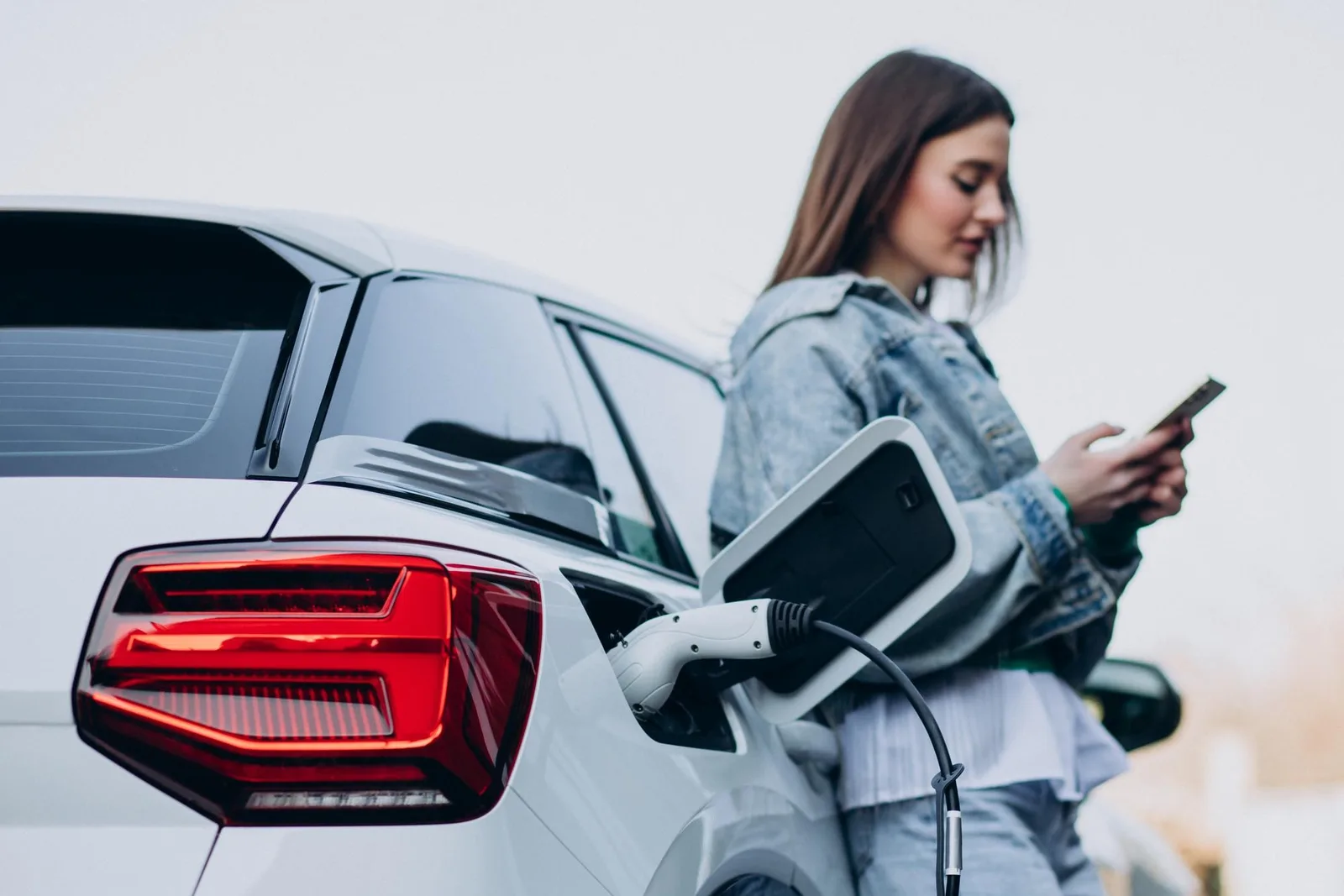
In short
A used electric car is a sound purchase when you can see the battery's state of health, the paperwork and the charging connectors before you pay. This guide puts the checks in the order you can do them and shows which EU rules help you and which do not yet reach cars on sale today. As of October 2026.
Contents
- Ask for the battery's state of health and for the method behind the number
- What EU rules mean for a used electric car bought today
- Warranty: the legal guarantee and the battery warranty are two different things
- Charging: check the inlet, the power and one real charge
- Checklist for the inspection and test drive
- Taxes and fees: the official page to read for each country
- What this means for buyers and for dealers
- Questions about used electric cars
- Official sources and calculators
- Sources
- Updates
Ask for the battery's state of health and for the method behind the number
A state-of-health figure is only useful when you know how it was measured. The EU Battery Regulation defines state of health as a measure of the general condition of a rechargeable battery and its ability to deliver the specified performance compared with its initial condition (Regulation (EU) 2023/1542, Article 3). The Euro 7 regulation adds that the term is not commonly defined and is determined by different methods, for example "state of certified energy" and "state of certified range" (Regulation (EU) 2024/1257, recital 33). Two reports with the same percentage can therefore rest on different measurements.
Ask three things: which method produced the number, when it was measured, and who measured it. The answer can come from the car's own display, from the manufacturer or from an independent workshop.
What EU rules mean for a used electric car bought today
Three EU rules shape what you can ask for, and none of them guarantees a used car a particular battery condition.
| Date | Rule | What it means for a used-car buyer |
|---|---|---|
| From 18 August 2024 | Battery Regulation, Article 14: up-to-date data on state of health must be held in the battery management system of electric vehicle batteries, and the person who legally purchased the battery gets read-only access, also through a third party acting on their behalf. | Ask the seller or a workshop to read the data. Whether a car built before that date is covered is a question for the manufacturer. |
| From 29 November 2026 (new vehicle types) and 29 November 2027 (all new cars) | Euro 7, Annex II: minimum battery durability for passenger cars. For battery-electric cars the energy-based minimum is 80 % up to 5 years or 100,000 km, whichever comes first, and 72 % up to 8 years or 160,000 km. | These limits apply to new cars. They do not cover a used car on sale now, so treat them as a reference point, not as a right. |
| From 18 February 2027 | Battery Regulation, Article 77: an electronic battery passport for each electric vehicle battery placed on the market or put into service from that date. | Do not expect a passport on a car first sold earlier. Ask for the documents that do exist. |
Warranty: the legal guarantee and the battery warranty are two different things
When a consumer buys from a trader, the seller is liable for defects that exist at delivery and appear within two years. For second-hand goods a Member State may allow the parties to agree a shorter period, but not shorter than one year (Directive (EU) 2019/771, Article 10). A defect that appears within the first year is presumed to have existed at delivery unless the seller proves otherwise, and Member States may extend this to two years (Article 11). A private sale is a different case, so ask first who the seller is.
The manufacturer's battery warranty is a separate contract. Before you pay, get these points in writing:
- how many years and kilometres it covers;
- the minimum battery capacity it promises, and how that is measured;
- whether it passes to a second owner;
- whether you must service the car at authorised workshops to keep it.
Charging: check the inlet, the power and one real charge
Public charging points in the EU must at least offer Type 2 connectors for AC and Combo 2 (CCS) connectors for DC (Regulation (EU) 2023/1804, Annex II), so a car with a Type 2 inlet and, for fast charging, the Combo 2 variant fits those points. Check the inlet on the car, then read the maximum AC and DC charging power in the specification sheet. Charge the car once on AC and, if you can, once on a DC point before you agree to the price.
Checklist for the inspection and test drive
| Check | How to do it | What you want to see |
|---|---|---|
| Battery report | Ask for the report with method, date and author. | A figure you can compare with the car's age and mileage. |
| Warranty papers | Read the battery and vehicle warranty terms. | Transfer to a new owner confirmed in writing. |
| AC charging | Plug into a public AC point. | Charging starts, the expected power shows, no error message. |
| DC fast charging | Connect to a DC point for a few minutes. | Charging starts and the power rises as the specification says. |
| Heating and heat pump | Run heating and air conditioning, and check whether the car has a heat pump. | The equipment matches the specification and works from cold. |
| Warnings, software, recalls | Ask the manufacturer about open recalls for the VIN. | No warning lights and no open recalls. |
| Service and ownership history | Compare service entries with the odometer. | Regular service and consistent mileage. |
| Charging habits | Ask how the car was mostly charged. | A direct answer, ideally backed by records. |
| Cables and keys | Count the charging cables and keys. | A complete set. |
Taxes and fees: the official page to read for each country
Taxes and fees for electric cars differ by country and change over time, so we give no amounts here. Official sources as read on 19 October 2026:
| Country | What the official source says | Calculator or page |
|---|---|---|
| Slovenia | The person who acquires a vehicle from another EU member state declares the motor vehicle tax (DMV). The vehicle can be registered only after the assessment and the homologation procedure are complete (FURS, page updated 23 February 2026). | FURS: buying a vehicle in another EU state, with a link to the DMV calculator |
| Croatia | A person who acquires a used vehicle in Croatia pays an administrative fee at the registration station. It is not charged for exclusively electric vehicles (Porezna uprava, updated 23 January 2026). | Porezna uprava: acquiring a used vehicle; the customs calculator for the special tax asks for the new-vehicle sale price, not the market value of the used car |
| Germany | Kfz-Steuer starts with registration. Pure electric vehicles first registered between 18 May 2011 and 31 December 2030 are exempt for up to ten years, and not beyond 31 December 2035. After a change of keeper the exemption continues for the remaining period (Zoll). | Zoll: electric vehicles and the Kfz-Steuer calculator |
| Austria | For a car imported from another EU country, a private person calculates the NoVA and pays it before registration. For used cars from EU and EEA states it is calculated under the law in force at first registration (usp.gv.at, updated 1 July 2026). | usp.gv.at: NoVA, with a link to the federal NoVA calculator |
What this means for buyers and for dealers
For buyers: Decide your charging situation first, then use the checklist above on every car you view. Keep the official calculator for your country open when you compare prices, because the fees decide the real cost.
For dealers: A battery report with its method and date, the manufacturer's warranty terms and proof of a completed charge answer the checklist questions before the buyer asks them. To source electric stock, save a search in WeltScout with the fuel set to electric in the extended filters. It covers 50+ portals in 14 countries, sends alerts by WhatsApp or e-mail, and checks once or twice a day depending on the plan. The trial needs no card.
Questions about used electric cars
Which battery state of health is acceptable?
No EU rule sets a minimum for used cars. As a reference, Euro 7 sets 80 % up to 5 years or 100,000 km for new battery-electric cars, but only from November 2026 for new types. Compare the figure with the car's age and mileage and ask how it was measured.
Does the legal guarantee apply when I buy from a private person?
The EU directive on sales of goods covers contracts between a consumer and a trader. For a private sale, national law applies, so check it for your country before you sign.
Is there a subsidy for a used electric car?
It depends on the country and the programme. Germany's federal programme for 2026 requires a new car first registered in Germany from 1 January 2026 (BAFA). Slovenia's call JP SUB-EV26 accepts used electric cars up to three years old, bought from a registered seller and not from a private person (Borzen FAQ). Check the status of a call before you rely on it.
Can I read the battery data myself?
The Battery Regulation gives the person who legally purchased the battery read-only access to the state-of-health data in the battery management system (Article 14). In practice you need the manufacturer's tool or a workshop that can read it, so ask the seller to arrange this before you buy.
Official sources and calculators
Read on 19 October 2026: Regulation (EU) 2023/1542, Regulation (EU) 2024/1257, Directive (EU) 2019/771 and Regulation (EU) 2023/1804. More guides are on the blog.
Sources
- Regulation (EU) 2023/1542 concerning batteries and waste batteries European Union, EUR-Lex,
- Regulation (EU) 2024/1257 (Euro 7) European Union, EUR-Lex,
- Directive (EU) 2019/771 on certain aspects concerning contracts for the sale of goods European Union, EUR-Lex,
- Regulation (EU) 2023/1804 on the deployment of alternative fuels infrastructure European Union, EUR-Lex,
- Nakup novega ali rabljenega vozila v Sloveniji ali v drugi državi članici EU Finančna uprava RS (FURS),
- Stjecanje rabljenih motornih vozila Porezna uprava RH,
- Informativni kalkulator za izračun PPMV-a Carinska uprava RH,
- Kraftfahrzeugsteuer: Elektrofahrzeuge Zoll,
- Kfz-Steuer-Rechner Zoll,
- Normverbrauchsabgabe (NoVA) Unternehmensserviceportal (USP), Republik Österreich,
- E-Auto-Förderung 2026: Fördervoraussetzungen BAFA,
- Odgovori na vprašanja fizičnih oseb, vezana na javni poziv JP SUB-EV26 Borzen,
Updates
- : Moved from the old site and rewritten to the new standard.
Searching several portals at once?
7 days freeNo card needed
Read next
For dealers and buyers7 min read
Buy a used car from Germany and import it to Serbia: customs, VAT, Euro 3
What you pay and which papers you need to bring a used car from Germany to Serbia: customs duty, VAT, Euro 3 and registration. Official sources read 28 October 2026.
For dealers and buyers5 min read
Buy a used car from Germany and import it to Slovenia: tax, plates, registration
What you pay and which papers you need to bring a used car from Germany to Slovenia: VAT, DMV, plates, conformity and registration. Sources read 28 October 2026.
For dealers and buyers5 min read
Buy a used car from Germany and import it to Croatia: PPMV, VAT, plates
What you pay and which papers you need to bring a used car from Germany to Croatia: PPMV, VAT, plates and registration. Official sources read 28 October 2026.