For buyers8 min read
Best place to find a used car online: sources and how to compare
- Author
- Luka Velkavrh
- Edited by
- WeltScout editorial team
- Published
- Updated

In short
No single site is the best place to find a used car online. You find cars faster if you write down your criteria first, check several sources of listings, set up alerts for new ads and compare every offer in one log. This guide is for private buyers looking for a car at home or abroad. As of October 2026.
Contents
- What to write down before you open the first site
- Where to look: types of sources
- Why one site is not enough
- Save your searches and switch on alerts
- Compare three ways of searching
- Weed out duplicate listings
- A search log: a table for comparing offers
- Red flags in a listing
- Checks before you pay
- Official sources
- What this means for a buyer
- Example: one search on 11 portals
- Frequently asked questions
- Sources
- Updates
What to write down before you open the first site
A search goes faster when you already know what you will turn down. Note:
- your total budget, which includes transport, registration, any taxes and a first service on top of the price;
- the model and generation, not only the make, because engines and known faults differ between generations;
- engine, gearbox and fuel;
- a ceiling for mileage and age;
- equipment you will not do without, such as a tow bar or a reversing camera;
- the longest distance you will travel to see a car;
- reasons for an immediate no, such as no service history or a seller who will not give the chassis number.
Where to look: types of sources
Choose sources by whether price or choice matters more to you, and expect to use more than one.
| Source | What you get | Watch out for |
|---|---|---|
| Large general classifieds | The most listings, from private sellers and dealers | Duplicate ads, outdated prices, uneven data quality |
| Dealer websites | Stock described by the dealer | Narrow choice; the advertised price is often a starting point for negotiation |
| Manufacturer approved-used programmes | Cars from one brand network | Read the warranty and inspection terms yourself, they differ |
| European portals abroad | Wider choice and different prices for the same model | Transport, taxes and registration, language, harder viewing |
| Search engines that combine several portals | One view instead of many tabs | They may not hold every ad, so always open the original listing |
Why one site is not enough
Each site holds its own set of listings, so one car can appear in several places while another appears in only one. If you search on a single site, you see part of the market.
You have three ways to widen it. The first is manual searches on a few sources with the same filters. The second is a saved search with an alert for new ads, which many sites offer, so check whether yours does. The third is a search engine that combines several portals. The same rule applies to all three: a well-priced car often sells quickly, so how fast you notice a new ad matters.
Save your searches and switch on alerts
Many larger portals offer saved searches with alerts; whether and how is something to check in each portal's settings. Instead of retyping your conditions every day, let new listings come to you. Set up two versions of the same search: a narrow one that matches your criteria exactly and a wider one with a slightly higher price or more mileage. The narrow one tells you what to buy, and the wide one shows whether your prices are close to the market.
Compare three ways of searching
| Method | What it covers | Strength | Limit |
|---|---|---|---|
| Browsing by hand | The portals you open | Full control | The same filters on every portal, every day |
| Saved searches on a portal | One portal per search | Often built in, alerts by e-mail or in the app | You maintain searches separately on each portal |
| A tool that watches several portals | With WeltScout, 50+ portals in 14 countries | One setup, alerts on WhatsApp or by e-mail | Paid; checks once or twice a day depending on the plan |
Weed out duplicate listings
The same car is sometimes listed more than once, by different sellers or on several portals. Copy the VIN into your sheet when you first view a listing: if it turns up again, it is a duplicate and you can drop it. Check the vehicle history by VIN before you phone the seller. If a portal lets you hide sellers, hide those who post incomplete details or photos that do not match the description.
A search log: a table for comparing offers
A spreadsheet log keeps offers from blurring together and, after a few days, shows you a realistic price for your criteria. Each offer gets one row.
| Column | What to enter | Why |
|---|---|---|
| Link and source | The ad address and where you found it | With duplicate ads you can see where the offer is cheaper |
| Price, year, mileage | Figures from the ad | Outliers stand out against comparable cars |
| Chassis number (VIN) | Yes or no, and when you received it | A seller who will not give it is already a warning |
| Service book and invoices | Yes, no, partly | You quickly drop offers with no history |
| Status | Question sent, viewed, rejected, and why | Next time you do not repeat the same conversations |
Once you have several entries for the same model, you can see which offers fall outside the normal range. Until you know why an offer is far cheaper than the rest, do not trust it.
Red flags in a listing
A suspicious listing is usually given away by a combination of signs. Be careful if:
- the price is far below comparable offers and there is no explanation;
- the seller does not answer questions about the chassis number or service history;
- they ask for payment in advance or suggest an "agent" who will hold the money safely;
- the photos look like they were taken in different places, or the description is thin or copied;
- they rush you because "many other people are interested".
Checks before you pay
Do the checks in this order, because the early ones cost least and weed out bad offers fastest.
- Get the chassis number and photos of the vehicle documents.
- Check the vehicle history with an independent, usually paid, service rather than relying only on the seller.
- View the car yourself, or have an independent expert inspect it if it is far away.
- Sign a sales contract that names the vehicle and the seller.
- Take the original documents: registration certificate, service book and invoice.
- Pay on collection or through a secure channel, never in advance without safeguards.
Official sources
If you buy in another EU country, rely on official sources. We read them on 19 October 2026. Your Europe states that you have a minimum of 2 years' guarantee when buying from a professional seller in the EU, that it may be reduced to no less than 1 year for used vehicles if buyer and seller agree this at the time of purchase, and that EU consumer rights do not apply to private sales: Buying and leasing a car in another EU country. If you plan to bring a car into Great Britain, GOV.UK lists the steps, including telling HMRC within 14 days of arrival and registering with the DVLA after vehicle approval: Importing vehicles into the UK. We do not give tax amounts here.
What this means for a buyer
If you are buying one car, it is usually enough to check a few sources by hand with the same criteria, set alerts and keep a log.
WeltScout is a tool for dealers and brokers: it combines listings from 50+ portals in 14 countries and sends alerts about new ones on WhatsApp or by e-mail. We currently offer plans to dealers, so it is usually not the right fit for a private buyer. If you buy through a dealer, ask how they search foreign sources. You will find more articles on the blog and the tool on the home page.
Example: one search on 11 portals
One search for the Audi A4 Avant with ten filters returned 854 matches on 27 October 2026 on 11 portals in 11 countries. One portal returned 745, six others together 109, and four portals returned none. This is a snapshot of one search on one day, not market statistics. The table by portal, the method and the limits are in the article One search, 11 portals: what an Audi A4 Avant returns.
Frequently asked questions
How many sites should I check?
Enough to cover at least one large local source and, if you are open to buying abroad, one European one. Every extra source adds work, so add one only when your log shows the local ones are not enough.
Is it worth searching abroad?
Only if the price gap survives all the costs: transport, registration and any taxes. Check the official sources first, and only then think about viewing a car.
How do I know a price is realistic?
Compare it in your log with several ads for the same model, year and similar mileage. An offer that stands out on the low side needs an explanation before you take it seriously.
Does WeltScout help private buyers?
We currently offer plans for dealers and brokers. The advice in this article applies to anyone looking for a car, but the tool is built for dealers.
Sources
- Buying and leasing a car in another EU country Your Europe (European Commission),
- Importing vehicles into the UK GOV.UK,
Updates
- : Moved from the old site and rewritten to the new standard.
- : Added a section with the example of one search on 11 portals from 27 October 2026. The rest of the content is unchanged.
- : Added the sections on saved searches, the comparison of search methods and duplicate listings from the article “How to find a used car online faster, step by step”, which now redirects here.
Searching several portals at once?
7 days freeNo card needed
Read next
For dealers and buyers7 min read
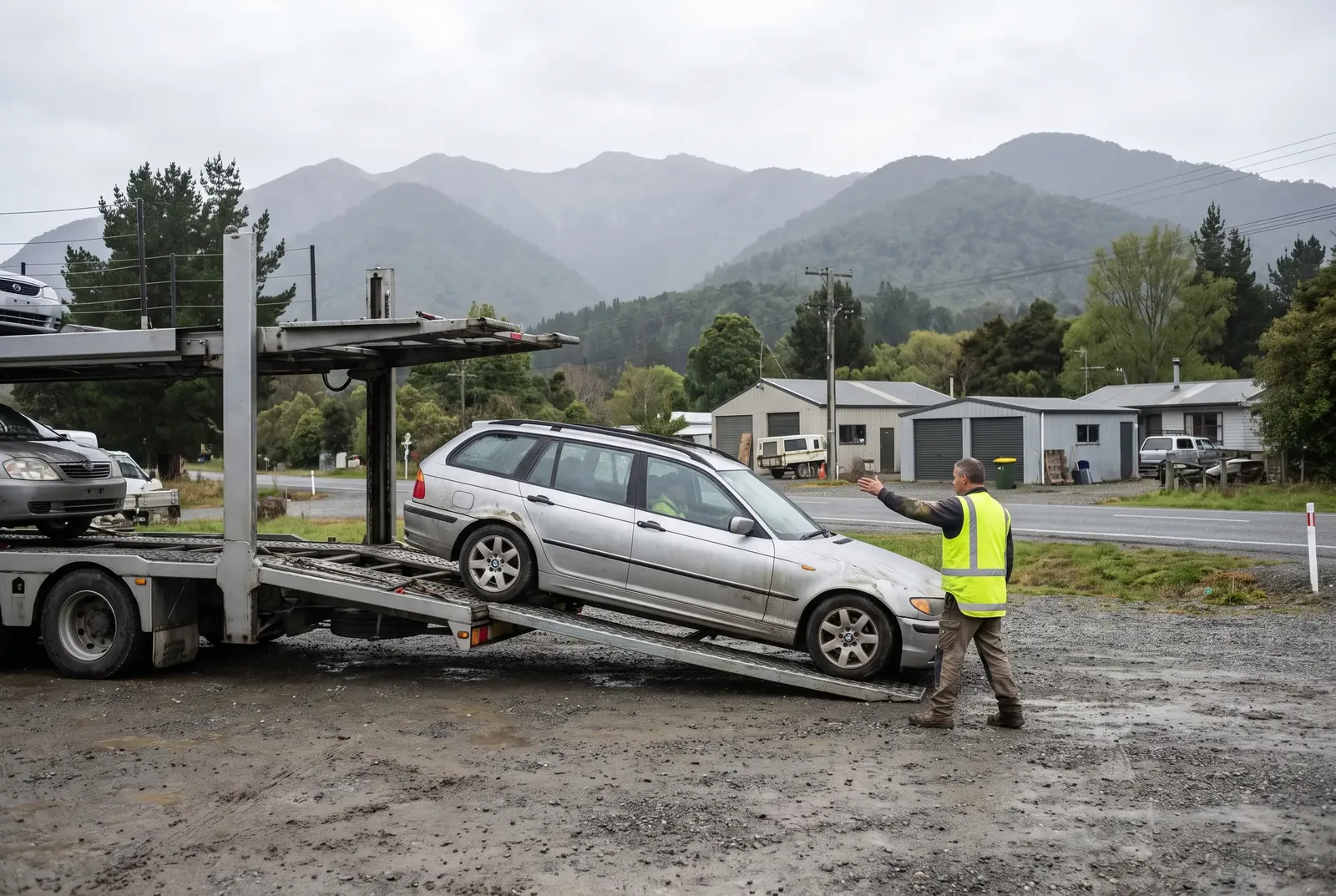
Buy a used car from Germany and import it to Serbia: customs, VAT, Euro 3
What you pay and which papers you need to bring a used car from Germany to Serbia: customs duty, VAT, Euro 3 and registration. Official sources read 28 October 2026.
For dealers and buyers5 min read
Buy a used car from Germany and import it to Slovenia: tax, plates, registration
What you pay and which papers you need to bring a used car from Germany to Slovenia: VAT, DMV, plates, conformity and registration. Sources read 28 October 2026.
For dealers and buyers5 min read
Buy a used car from Germany and import it to Croatia: PPMV, VAT, plates
What you pay and which papers you need to bring a used car from Germany to Croatia: PPMV, VAT, plates and registration. Official sources read 28 October 2026.