For dealers and buyers7 min read
Buy a used car from Germany: VAT, plates and registration in the EU
- Author
- Luka Velkavrh
- Edited by
- WeltScout editorial team
- Published
- Updated
In short
A used car bought in Germany carries no customs duty anywhere in the EU. What you pay depends on VAT, which follows the seller and the car's age and mileage, and on registration tax and fees under the rules of the country where you register it. This guide is for private buyers and dealers in any EU country and gives no tax amounts, because those come from official calculators. As of October 2026.
Contents
- Do you pay customs duty on a used car from Germany?
- Is the car new or used for VAT?
- The steps, in order
- Germany-specific: export plates and what the registry needs
- Where to find the rules for your own country
- If you register the car in Austria or buy it outside the EU
- What this means for a private buyer and for a dealer
- Frequently asked questions
- Sources
- Updates
Do you pay customs duty on a used car from Germany?
No. If you buy a car in another EU country and take it to your country of residence, you do not pay customs duty (Your Europe, European Commission). A car from outside the EU is different: it is treated like any other import, with customs duty and import VAT. This guide therefore covers Germany, Austria and other EU countries, not Switzerland or the UK.
Is the car new or used for VAT?
For VAT purposes a car is used only if it has done more than 6,000 km and was supplied more than six months after its first registration. A car that fails either test counts as new. The European Commission gives two examples: a two-year-old car with 4,000 km is still new for VAT, while a ten-month-old car with 6,500 km is not (European Commission, Taxation and Customs Union).
| Who sells | Car is used for VAT | Car is new for VAT |
|---|---|---|
| Private seller | No VAT is charged | VAT is due in the country where you register the car |
| Dealer or other business | VAT may or may not appear on the invoice, depending on the scheme the dealer uses; you do not pay VAT again at home | VAT is due in the country of registration; tell the dealer so you are not charged German VAT, or claim it back |
If you have paid VAT in both countries, you are entitled to a refund. Take it up with the seller first and then with the tax authority of the country where you bought the car (Your Europe).
The steps, in order
- Check the papers before you pay. You need the original registration documents, and the seller should give you everything required to register the car in your country. In Germany these are Teil I and Teil II of the registration certificate. A certificate of conformity (COC) from the manufacturer is among the documents that German and Austrian authorities ask for.
- Get an invoice that shows the VAT treatment. The date of supply, which can be the order date or the invoice date, differs from country to country (Your Europe).
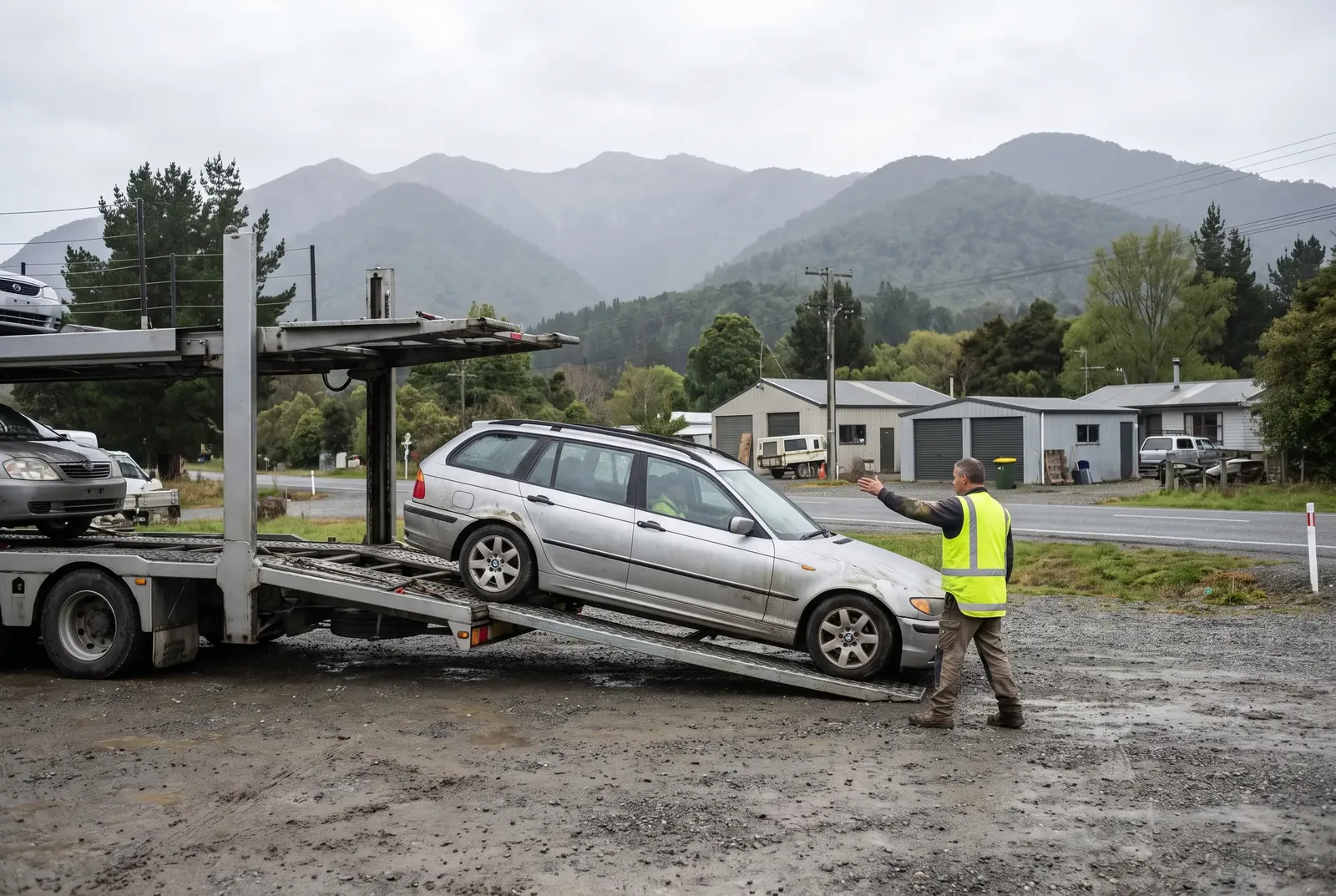
- Arrange how the car gets home. You cannot drive it on the plates of your old car. Options are towing, a specialist transport company, or driving it yourself on temporary plates with insurance. Temporary plates are not harmonised in the EU, so check that every country on your route accepts them.
- Register the car in your country of residence. There are no common EU rules for registration or registration tax. Your national registration and tax authorities set the deadlines, the roadworthiness test and the fees.
- Pay the national taxes and keep the receipts. If you were charged VAT twice, claim the refund with proof of registration.
Germany-specific: export plates and what the registry needs
A buyer from another EU country who wants to drive a car out of Germany normally uses export plates (Ausfuhrkennzeichen). Under the German vehicle registration ordinance they are valid for at most one year, require liability insurance for foreign vehicles, and the car must have a valid periodic inspection (HU) if one falls due before the plates expire (§ 45 FZV). For a car that is already registered, the owner applies at the German registration office with the registration certificate and the old plates. If you are bringing a car into Germany instead, the German consumer centre lists the usual extra documents: foreign registration papers, a COC, and proof of a valid inspection for cars older than three years (European Consumer Centre Germany, page updated April 2024).
Where to find the rules for your own country
| Question | Who decides | Where to look |
|---|---|---|
| Registration tax, road tax, deadlines | National tax and registration authorities | Your Europe pages on car registration, which link to the national authority for each country |
| VAT on the purchase | Tax authority of the country of registration (new cars) or of purchase (used cars) | Your Europe: VAT when buying or selling a car |
| Disputes with a trader in another EU country | European Consumer Centre in your country | ECC-Net: buying a car in another EU country |
Country guides with official sources read on 28 October 2026: Slovenia, Croatia and Serbia.
There is no EU-wide calculator, because passenger car registration tax is not harmonised at EU level and each country sets its own (Your Europe, read on 19 October 2026). This article is not tax advice.
If you register the car in Austria or buy it outside the EU
Austria is in the EU, so the VAT rules above apply, but a car imported there must also be entered in the national approval database, and the standard consumption tax (NoVA) and acquisition VAT (Erwerbsteuer) are paid together before registration (Austrian Federal Ministry of Finance). The ministry offers a NoVA calculator. A car from Switzerland or any other non-EU country goes through customs and import VAT first.
What this means for a private buyer and for a dealer
For a private buyer
Compare the full cost, not only the price: transport, plates and insurance, registration tax, the cost of the inspection and your own travel. The European Consumer Centres also advise checking the seller in public company registers, asking for the vehicle's serial number, ownership proof and service history, and avoiding advance deposits to unknown accounts.
For a dealer
A dealer who buys for resale deals with the same VAT question on every car: general scheme or margin scheme. The rules for businesses sit in the VAT rules of your own country, so confirm them with your tax adviser. The slow part is often finding the cars. WeltScout monitors 50+ portals in 14 countries and alerts you to new listings on WhatsApp or by e-mail, with checks once or twice a day depending on the plan. The Business plan starts at 129.90 EUR a month excluding VAT, and the trial needs no card. The app is currently in English, and support answers in English and in the other site languages.
Frequently asked questions
Can I buy a car in Germany if I live in another EU country?
Yes. As an EU citizen you are free to buy a car anywhere in the EU. Your rights, including the VAT you pay, depend on whether the car is new or used, whether you buy from a dealer or a private person, and where the seller is based (Your Europe).
Do I get a warranty on a used car from a German dealer?
Under EU consumer rules a dealer must give a legal guarantee of at least two years. In some EU countries it can be reduced to no less than one year for a used car if both sides agree at purchase. These rights do not apply to sales between private persons (Your Europe).
Can I drive the car home on my old number plates?
No, that is illegal. You need temporary plates and insurance from the country where you buy the car, and you should check they are accepted along the whole route (Your Europe).
Do I pay VAT twice?
You should not. VAT on a new car is payable in the country of registration, and if you paid it in the country of purchase as well, you can claim it back. For a used car, you pay VAT only where the invoice shows it, and none at home.
More guides are in the WeltScout blog.
Sources
- VAT when buying or selling a car Your Europe, Evropska komisija,
- Buying and leasing a car in another EU country Your Europe, European Commission,
- FAQs - Buying and leasing a car Your Europe, European Commission,
- Car registration in another EU country Your Europe, European Commission,
- Buying and selling cars European Commission, Taxation and Customs Union,
- Buying a Car in another EU Country European Consumer Centres Network (ECC-Net),
- § 45 FZV - Fahrten zur dauerhaften Verbringung eines Fahrzeuges in das Ausland gesetze-im-internet.de, Bundesministerium der Justiz,
- Ein Auto aus dem Ausland überführen & in Deutschland zulassen Europäisches Verbraucherzentrum Deutschland (ECC-Net),
- Verfahren (Fahrzeugimport) Bundesministerium für Finanzen, Österreich,
- Berechnungsprogramme (NoVA-Rechner) Bundesministerium für Finanzen, Österreich,
Updates
- : Moved from the old site and rewritten to the new standard.
- : Retitled around buying a used car from Germany; links to the country guides for Slovenia, Croatia and Serbia.
Searching several portals at once?
7 days freeNo card needed
Read next
For dealers and buyers7 min read
Buy a used car from Germany and import it to Serbia: customs, VAT, Euro 3
What you pay and which papers you need to bring a used car from Germany to Serbia: customs duty, VAT, Euro 3 and registration. Official sources read 28 October 2026.
For dealers and buyers5 min read
Buy a used car from Germany and import it to Slovenia: tax, plates, registration
What you pay and which papers you need to bring a used car from Germany to Slovenia: VAT, DMV, plates, conformity and registration. Sources read 28 October 2026.
For dealers and buyers5 min read
Buy a used car from Germany and import it to Croatia: PPMV, VAT, plates
What you pay and which papers you need to bring a used car from Germany to Croatia: PPMV, VAT, plates and registration. Official sources read 28 October 2026.